
The Pathway Down
Day 73 — September 1, 2026
Wake-up feel: 7.
Up earlier than usual. Thoughts of life crises — the ones walked through, the ones still waiting — and of community, what holds it together, what it asks of each one inside it. Then, as every morning, my family.
Up. Exercises. Shower. Out, and up the pathway — the one laid these last days with the stones the mountain gives — and on past it, up the mountain.
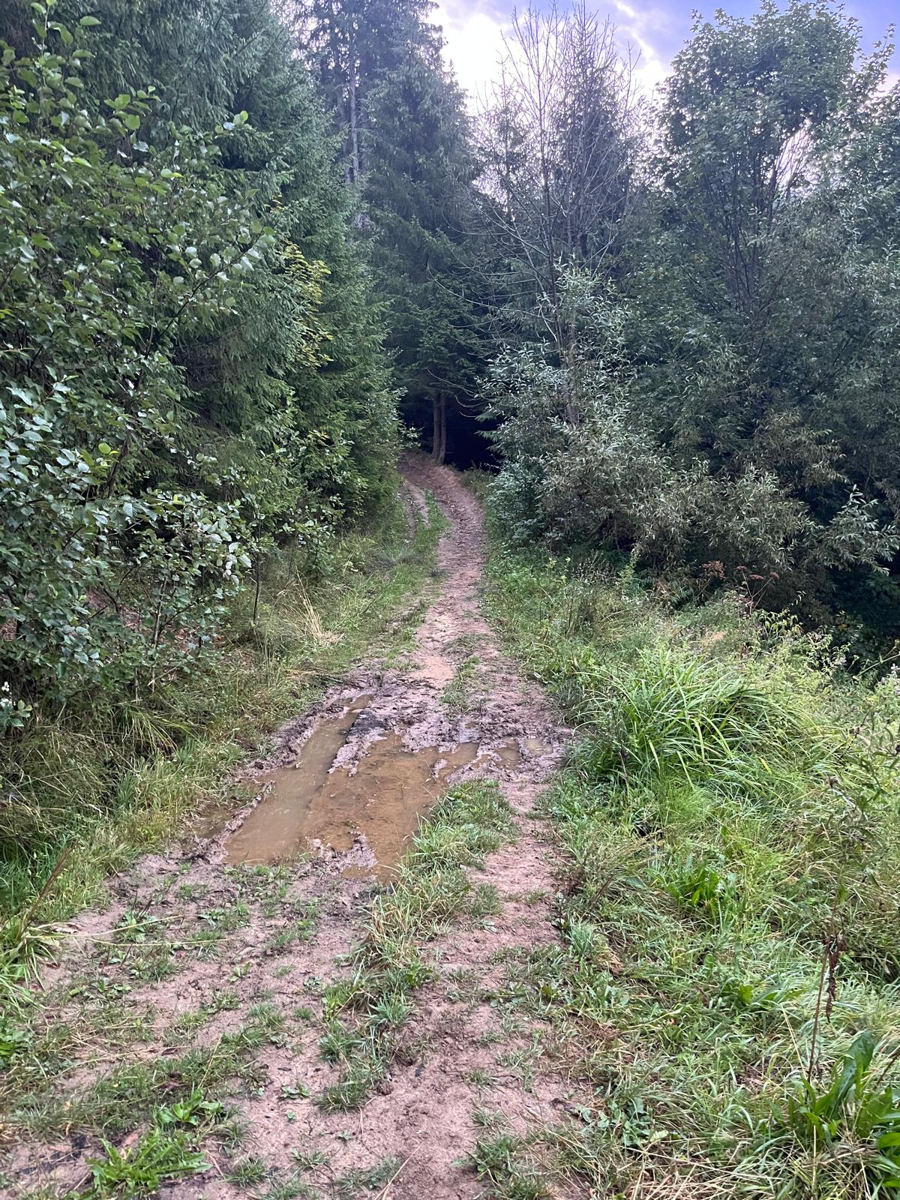
It is said that the pathway down the mountain is the hardest. Those who have gone up and come down again say it — the climbers, and the ones whose mountain was inside them. Going up, the height does the pulling. Coming down, nothing pulls; every step is placed, the knee carries the weight of all that was gathered above, and the valley does not ask what was seen up there. What was found on the height has to be carried down whole, and the way down is where it is tested.
Eighty-four days on the flat Baltic ground last spring, and no pathway down to speak of — the coming down happened afterwards, off the page. Here every path climbs or descends. The year itself is on its way down: it breathed out to midsummer; since then it draws back in. In a few weeks, by whichever column this valley keeps, the herds come down from the polonyna, the trembita in front, and the one flock is separated back into its families. The dead came down for their apples two weeks ago.
On the Baltic the walk turned at its middle from one question to the other — who am I, and then, what am I for. The first question climbs; it has the height for company. The second has only the way down — into the household, the village, the family, where the answer is not spoken but lived, and where nobody asks it. Paul wrote it to Corinth in one line: now I know in part.
Water through the night and the early hours; at ten the turn to warmth, and the sun into the Lion's month by the old star-count. The printed calendar reads the day this way. In the water hours everything living is sap and leaf — the fluids move, sleep runs thin, the dreams come and the sleeper wakes before his time. From ten the warmth takes over: fruit and seed, ripening, the will to do — the hours for the stones and the pathway. The moon four nights past full, its light waning, its arc still climbing. Until the fourth, the calendar holds, everything that grows sends its strength upward, into leaf and fruit and blossom, and the bees follow it into the tree tops; what is cut now is cut for keeping. From Friday the moon comes down, and the sap goes down with it, into the root — the planting time opens, and whatever is set into the ground in those days takes hold. The dark moon on the eleventh, on the old-style Holovosiky.
Two columns keep this day. By the new one the church opens its year this morning — the Indiction, Novolittia — and the calendar names Symeon the Stylite, Semen in the mouths of the villages, Semen who sees the summer off. By the old one today is Andrew the General and his soldiers, and Semen waits until the fourteenth, where the older count has always kept him: the meeting of autumn, the farewell to the summer and to the old year, the women's summer opening with the spider silk in the grass and running to the Exaltation of the Cross. The new column holds the church's day. The old column holds the year as the body of the valley was raised to feel it — the summer ending when the work ends, not when the calendar turns — and that knowledge sits deeper than any printed date, in the people and in the ground. Yesterday, they say here, was the last day of summer. Which count they were keeping, I did not ask.
The herds are still up. So am I.
Day 73
Verkhovyna, Carpathian Mountains, Ukraine
© 2026 Michel Garand | A Pilgrim's Journey | CC BY-SA 4.0
stewardship@ubec.network